Menu Close
l o a d i n g

P-1 Pravda

pravda-c

Technical data
  • P-class fleet submarine
  • Length: 90 meters
  • Max dive depth: 70 meters
  • Armament: 2 x gun towers, 4 x bow and 2 x stern torpedo tubes, 10 x torpedoes
  • Crew: 54 men
  • Found and identified by our team in 2012
  • Wreck depth: 75 meters
  • Sank as a result of a mine explosion in a German minefield while cruising on the surface
Submarine history

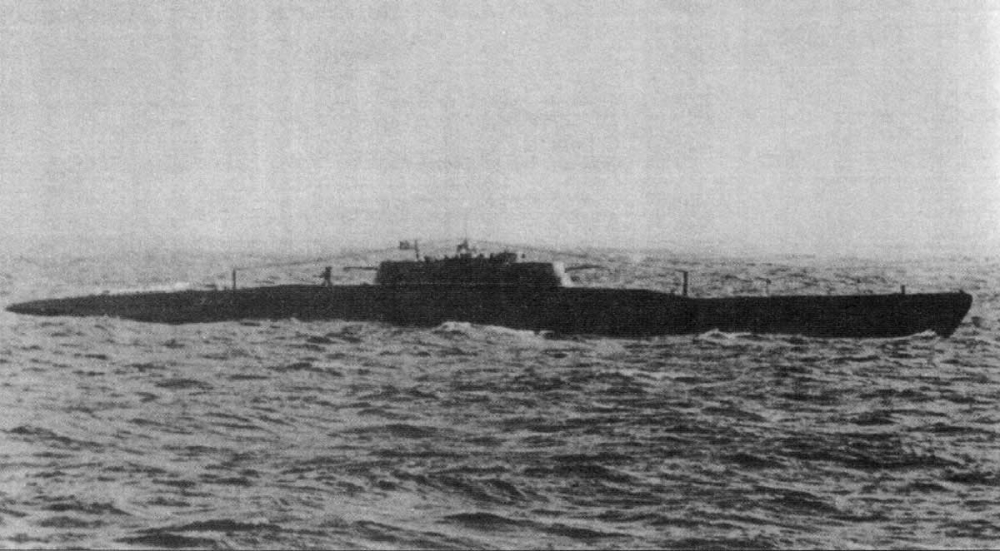
P-class submarines were named after the lead sub, Pravda, and had an unusual design for the Soviet Fleet. They were the size of a typical destroyer and had powerful guns. They were invented and built following the trend in the 1920s and 1930s of building “undersea cruisers”. The most advanced subs of that type were built by the English and French navies – they even had huge 305mm guns and seaplanes on board.
p114_0_o

Under Soviet doctrine, P-class subs were intended to move together with a squadron of battleships and join in major naval battles. The construction plan for these huge submarines was quite ambitious, but due to the lack of technology at the shipyards and qualified engineers in the Soviet Union, the quality and design of these subs was far from optimal. After all three subs of this class were commissioned in the mid-1930s, it became clear that the design and construction defects made these ships dangerous to operate in real combat conditions. The subs were moved to a training brigade, where they met WWII.

p12_0_o

Tallinn was abandoned on 28 August 1941 and the very last M-class subs covering the Soviet Fleet’s retreat returned from their positions on 3 September. The entire Soviet Baltic Fleet was then deployed between Leningrad and Kronstadt. The situation in Leningrad was critical, as the Germans were approaching the outskirts of the city. Baltic Fleet sailors began to prepare for an assault on the city, rigging their ships with explosives in case they needed to be destroyed and undergoing infantry training.

Despite this situation, on 9 September, Lieutenant-Captain Ivan Loginov, commander of the Baltic Fleet’s largest submarine, Pravda, received secret order 620ss. Pravda was ordered to start her first combat patrol with a very unusual mission.

Mission

On 7 September 1941, someone at Fleet Command decided to put the huge but useless P-class submarines to use as cargo transports to deliver ammunition and food to the Soviet troops under siege on the Hanko Peninsula. A cargo plan was calculated, according to which Pravda loaded 154 boxes of conserved meat into her torpedo tubes and empty tanks, as well as 100 rounds each of 130mm, 100mm, 76mm and 45mm shells, plus 1.9 tonnes of medical supplies into the hold and empty tanks. Overall, Pravda was loaded with 21 tonnes of cargo.

Pravda was the first to be assigned, planning to follow the route that M-98 had taken when she returned to Kronstadt after the Tallinn operation. They hoped to take advantage of the P-class subs’ high surface speed. The submarines were to cross the Gulf of Finland in one night at a surface speed of 15-18 knots. They were only to submerge to avoid enemy contact. On the morning of 10 September, Pravda finished loading and preparing for her patrol. She left port at 13:10 accompanied by two minesweepers and two motorboats heading from Kronstadt to Gogland.
p13_0_o

At about 21:00, the convoy reached the southern tip of Gogland Island and the escort ships turned back. From Gogland Island’s southern lighthouse, they used semaphore flags to signal for Pravda to continue and hoisted the flag signalling “safe travels” from the lighthouse mast.

Pravda disappeared into the dark, heading west. The Gogland Island lighthouse personnel were the very last people who saw the submarine and her crew. After 70 years, Pravda’s hull was discovered south of the Finnish Kallbadagrund lighthouse, at the coordinates of the northern edge of the Yuminda minefield.

Before she sank, the submarine managed to travel 45 miles of her route, until she hit a mine on her portside and sank in minutes, taking all 55 crewman to the seafloor: it turned out the route that the smaller M-class submarines had used to slip through the minefield the week before was not large enough for the huge Pravda.

Submarine discovery and exploration

In the summer of 2008, the submarine’s hull was discovered at a depth of 75 meters during the construction of the Nord Stream gas pipeline, but the discovery was not made public until 2011 when the submarine was re-discovered by Finnish divers led by M. Ivanov.

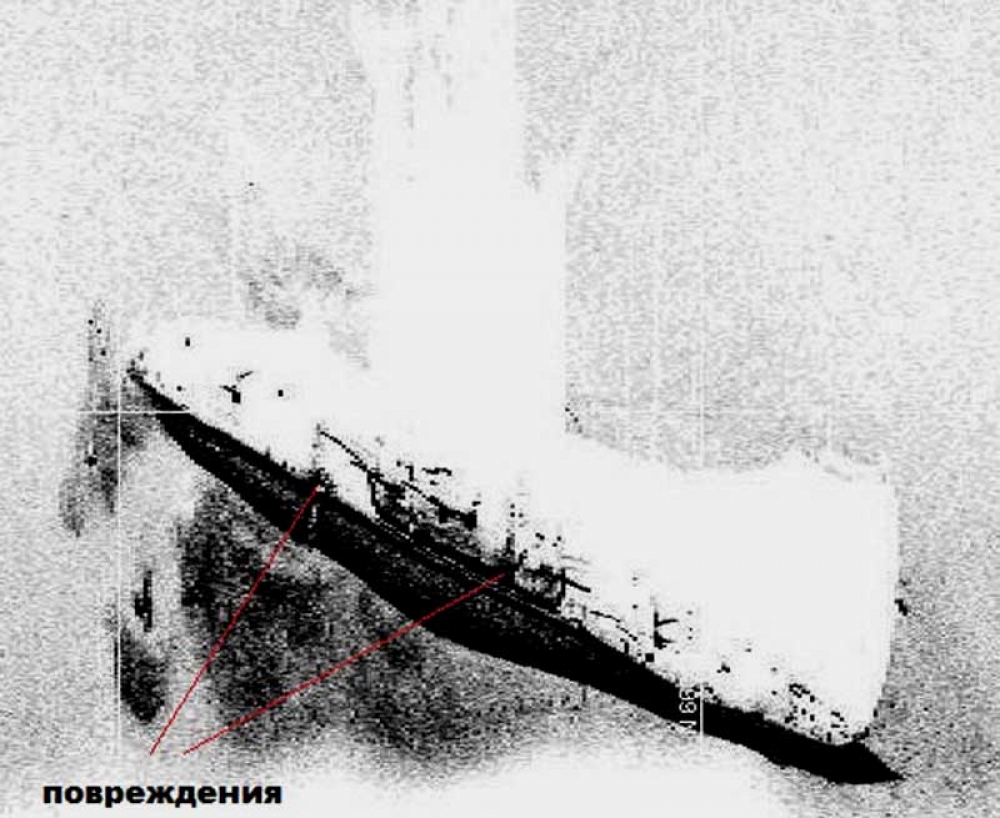
The submarine lies on the seafloor rolled 25 degrees to portside with a slight differentiation to aft, so that the bow is completely above the seafloor and the last 10-15 meters of the stern is nearly hidden below the ground. A lacerated crack from the mine explosion going across the sub’s hull can be seen right after the bridge, near the junction of the diesel and electric engine compartments. The main bridge hatch is ajar and, judging by the position of the telegraph handles, we assume that the bridge crew had tried to stop the submarine and may have been trying to avoid a collision with the mine.

In May 2012, for the 100th anniversary of the Pravda newspaper in honor of which the submarine was named, our team together with the Finnish team “Divers of the Dark” organised a commemoration and burial ceremony over the wreck. A memorial tablet with names of the submarine crew was installed on the remains of the famous and unlucky ship.

History without politics

Underwater Exploration Team

Our team

Konstantin Bogdanov

Founder, mastermind and main driving force behind the team

Russian Geographical Society’s “Person of the Year” in 2015. Has been diving since the year 1812, prefers Inspiration Vision. CMAS instructor.

Array ( [0] => https://www.facebook.com/bogdanovk )

Mikhail Ivanov

Universal soldier and walking encyclopedia, all in one

Knows everything about any events connected with the Gulf of Finland and military activity around it from any time period. Able to find things in archives and perform the most complex tasks under water. Holds the honorary title "High Efficiency". Special interest: submarines.

Array ( [0] => https://www.facebook.com/mikhail.ivanov.3152 )

Ivan Borovikov

Diver, underwater photographer and videographer

The team’s chief beard, GUE-fanatic and part-time expeditionary medic. Dives with JJ-CCR in GUE modifications.

Array ( [0] => https://www.facebook.com/ibgonfins )

Alexei Ivanov

Irreplaceable gasblender and tech guru

Military composure and liver training. IANTD instructor, diving since 2005, prefers CCR Inspiration.

Array ( [0] => https://www.facebook.com/gazonrus )

Innokentiy Olkhovoy

Diver, underwater cameraman, priest

In real life — a priest and steward of the Danilov Monastery. Team member since 2017. Prefers JJ-CCR, faithfully serves as the ship's chaplain, and in rare moments of rest writes songs and sings them with a guitar.

Array ( [0] => https://www.facebook.com/profile.php?id=100004743691645 )

Olga Akulova

Irreplaceable team member, photographer and, more recently, land-based expedition operator

Charming lady who cannot be found with fewer than two cameras in her hands 🙂 Doesn’t dive, but strongly sympathizes.

Array ( [0] => https://www.facebook.com/olga.akulova.92 )

Evgeny Abramov

Better known as “John”

Chief dolphin master, old soul, cupbearer and diver with vast experience.

Array ( [0] => )

Sumbat Alexandrov

Laugher in Chief

Professional diver. Cave dweller, handiman and a giant of a man with huge experience.

Array ( [0] => https://www.facebook.com/sumbik )

Evgeny Tutynin

Hydroacoustics expert, eyes and ears of the team

Began diving relatively recently and is now exploring the objects he finds not only on a sonar screen, but also in real life.

Array ( [0] => https://www.facebook.com/etutynin )

Nikolai Kudryashov

Producer

Enthusiastic open-cycle diver. Always ready in difficult times to offer support, help, stage bottles or snacks.

Array ( [0] => https://www.facebook.com/nick.kudryashov.1 )

Murat Kurbanov

Photoshop god

Doesn’t dive. Takes care of all the difficult jobs involving images (such as the “Lefort” mosaic), master of imagery, design guru, helps support dives.

Array ( [0] => https://www.facebook.com/muriq4ever )

M-96 Submarine

M-96 was the only submarine lost by the Baltic Fleet in 1944. The search for "Ninety-Six" in the area of the Seeigel mine barrage took our team over three years. It turned out that the Malyutka-class sub managed to pass through these minefields...

Transport “Ausma”

Another victim of the Tallinn Breakthrough. She was sunk on the afternoon of August 29, 1941 by German air bombardment within sight of Gogland Island. Most of the crew managed to abandon ship.

Patrol Ship “Cyclone”

Patrol ship Cyclone was one of the victims of the Tallinn Breakthrough. After the transport Balkhash hit a mine and sank, Cyclone entered the debris field attempting to rescue people from the water. A mine from the same mineline tore the ship in half; the wreckage now lies at 96 meters.

Icebreaker “Krishjanis Valdemars”

The icebreaker Krishjanis Valdemars rests at about 90 meters depth, her bow deeply buried in silt. Only the distinctive stern is accessible for inspection.

Transport “Naissaar”

Transport Naissaar was to take aboard 1,500 soldiers defending Tallinn. During the Breakthrough, she struck a mine near Juminda. Found and identified in July 2021.

Transport “Everita”

The transport Everita was evacuating the Naissaar Island garrison. She struck a mine near Cape Juminda and sank almost instantly. About 1,500 people perished.

Transport “Balkhash”

One of the first transports to perish near Cape Juminda. About 4,000 people died — the Paldiski garrison and their families. Identified August 2021.

Transport “Atis Kronvalds”

A Latvian steamship built in 1900. Took aboard 800 people in Tallinn. Sunk by air strikes August 29. Discovered June 2021.

Transport “Jarvamaa”

An Estonian steamship built in 1894. Took aboard 800 naval personnel. Severely damaged by air strikes August 29, burned all night, sank August 30. Discovered June 2021.

Hospital Transport “Alev”

Sank near transport Kalpaks on August 29, 1941. Beside the ship lies a passenger car that fell from the deck. Discovered June 2021.

Hospital Transport “Kalpaks”

Kalpaks sank August 29, 1941 at 4:46 PM after three bomb hits. Captain and first mate reports describe her heroic and tragic loss. About 1,500 perished.

German Submarine Hunters (U-Bootjager)

Four German submarine hunters from the 12th Flotilla, guarding the Seeigel mine barrage. Discovered during the search for submarine M-96.

L-2 submarine

L-2 submarine sunk after she hit the mines near Juminda peninsula in 1941. All crew, including famous poet, navigating officer of L-2 Alexander Lebedev, died with the ship.

Sch-302 submarine

Sch-302 was the one of four three subs of "Pike"-class Soviet WWII subs. She disappeared without a trace in her first war patrol in 1942. Submarine wreck was discovered only in 2019.

Destroyer “Kalinin” (“Pryamislav”)

Kalinin (until February 5, 1925 known as Pryamislav) was an Izyaslav-class destroyer, belonging to the second series of Novik-type destroyers. She was lost during the Tallinn Breakthrough and discovered by our team in 2018.

Destroyer “Novik” (“Yakov Sverdlov”)

A destroyer, hero of World War I, and the central figure of Valentin Pikul's novel "Moonzund." The destroyer Novik was sunk by a mine in 1941 during the Tallinn Breakthrough, under the name Yakov Sverdlov.

Sch-308 submarine

Sch-308, the "Pike"-class Soviet WWII sub took part in two war patrols and disappeared without a trace in 1942. The submarine wreck was found by our team in 2018. Russian president Mr Putin has visited the Wargrave in 2019 while taking part in the memorial ceremony.

Sch-405 submarine

Sch-405 was the unluckiest of the Soviet Baltic fleet subs of WWII times. She survived two commanders, and the third one died with the submarine. She managed to take part in one war patrol, nearly survived and sunk on her way to the second one by Nazi mine in Soviet-controlled waters.

“Kalinin” destroyer (formerly “Pryamislav”)

Destroyer "Kalinin" was sunk during Soviet fleet evacuation from Tallinn on August 28, 1941, soon after she hit a German mine on Juminda minefield in Gulf of Finland.

S-12 submarine

S-12 Soviet WWII submarine was one of five subs sent with order to break thru the German minefields, crossing the Gulf of Finland in 1943. She struck the mine and was torn apart by the explosion. Submarine wreck is laying at 87 meters depth.

Sch-317 submarine

This WWII-era Soviet Shchuka-class submarine is probably our most unexpected find of 2017, from a historical perspective.

Sch-406 submarine

Sch-406 was one of the most famous WWII-era Soviet Shchuka-class submarines, commanded by Hero of the Soviet Union E.Y. Osipov. She was lost without a trace in the Gulf of Finland in the spring of 1943. Our team found and identified Shch-406 on 2 May 2017.

Sch-320 submarine

Shch-320 was a WWII-era Soviet diesel-electric X series submarine, commanded by Ivan Makarovich Vishnevsky. She was lost without a trace during a combat patrol mission in the Gulf of Finland in October 1942. Our team found and identified Shch-320 on 1 May 2017.

Sch-408 submarine

Probably one of the most tragic tales of the Baltic submarine fleet. Sch-408 "Baltic Varyag" was forced to engage in an artillery battle with three German ships and submerged without lowering its flag.

Sch-324 submarine

This legendary Shchuka-class submarine – a veteran of the Finnish war – embarked on a unique 30-mile passage under the frozen Gulf of Finland with no navigational references, and was later sunk during its first WWII combat patrol.

M-95 submarine

The Malyutkas were one of the most numerous classes of WWII-era Soviet submarines. The M-95's crew fought to save their sub for two days and only attempted to abandon ship after exhausting every opportunity for survival...

Vaindloo freighter

One of the many victims of the so-called "Russian Dunkirk" – the Soviet evacuation of Tallinn. A huge number of ships in several waves broke through the minefields, aviation attacks and artillery fire at Kronstadt. Many of them did not make it, leaving the route from Tallinn to Kronstadt strewn with sunken ships, many of which have yet to be found.

XIX-century tall ships

The Gulf of Finland is the cradle of northern civilizations. Trade and sea traffic have existed there from time immemorial. The old trade routes are strewn with a huge number of sunken tall ships of all eras, nationalities and sizes. Most of them are in excellent condition: they are hard to access, but the cold waters of the Gulf of Finland keep the wood perfectly preserved. Artifacts can be found on almost every wreck: dishes, bells, personal belongings of crewmembers, anchors, helms, and remains of cargo. Among ourselves, we call these ships "Scanias" because they served as the long-haul trucks of their time.

MKT T-387 minesweeper

This Soviet naval minesweeper, which sank in 1944 after being hit by a torpedo from a German U-boat, was quite a puzzler. The extensive damage made it rather difficult for us to identify it and uncover its history.

Pallada armored cruiser

This giant armored cruiser with a crew of 550 tragically sank within minutes of a submarine attack, marking Russia's entry into WWI in the Baltic region.

Akula submarine

The legendary Akula submarine – the forbearer of the Russian submarine fleet – was lost without a trace more than 100 years ago, but has now been found.

T-18 torpedoboot

The German T-18 torpedoboot sank as a result of a skip-bombing attack by Soviet bombers near the Finnish port of Hanko. The ship's hull is broken into two parts that stand on the seafloor almost vertically, in a V shape. This was the only successful skip-bombing attack conducted by the Soviet Air Force in the Baltic theater. Our team found and identified the ship on 16 June 2014.

Vzryv and Provodnik minesweepers

WWI showed all of the world's governments that the rules of war at sea had completely changed. Mines, torpedoes, submarines, steamships and long-range artillery forced all naval powers to reconsider their shipbuilding plans. The need for a special class of ships appeared: minesweepers. This is the story of the Russian Imperial Fleet's very first minesweepers.

S-9 submarine

This S-class Soviet submarine was one of five that tried to break out of the Gulf of Finland in 1943. The sub's history is full of strange and surprising facts: she sank twice, was shelled and torpedoed, but remained in service until the very end.

Lefort – Russian wooden battleship

The last real wooden battleship of the Russian Imperial Fleet. This giant was considered unsinkable but went down in minutes, taking over 800 souls with her. This was the largest peacetime sea tragedy before the sinking of the Titanic and Estonia ferry. The event inspired Ivan Aivazovsky to create one of his best-known paintings, the Sinking of the Lefort. The nearly forgotten ship was found 150 years after the tragedy.

P-1 “Pravda” submarine

The Pravda submarine's developers envisioned a huge submarine, the size of a destroyer, surfacing among enemy ships and taking part in an artillery battle. We will tell the story of the sole attempt to send a P-class submarine on a combat patrol.


Contacts

Connect with us

We always welcome ideas for cooperation.
Support with organizing expeditions is especially important, either financial or otherwise: organizational, media and information.

We’ll be glad to share our unique shots from the wrecks with you, spotlight your company in news stories devoted to our expeditions, and much more.